The cover of Elisabeth Thomas’s Catherine House is what first caught my eye at ALA Midwinter. What got me to throw it into my tote was the very brief synopsis, less than fifty words, that managed to pack in three key phrases.
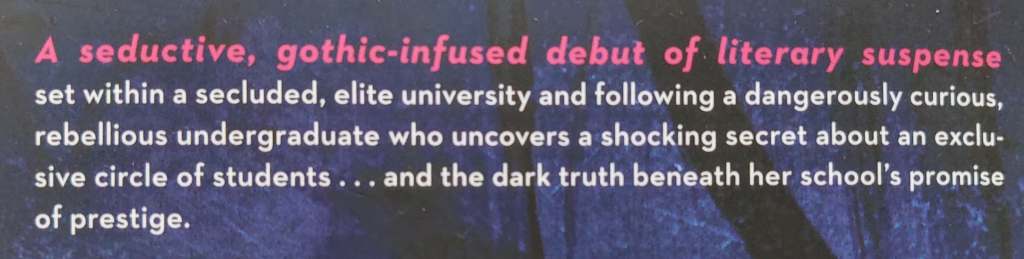
“Secluded, elite university,” “rebellious undergraduate,” “truth beneath her…school’s prestige” — as it turns out, these themes, when combined, fall under a specific “aesthetic” that extends into the book world: Dark Academia. And I first discovered all this thanks to a Goodreads list.
I get most of my upcoming book release news from email newsletters and Twitter, but when it comes to discovering older books, Goodreads can be a goldmine. For a couple months, I was obsessed with digging through its Listopia section in search for 2000s josei titles. After a certain point, all the lists began to look the same, so I decided to take a break from manga and try out a different approach. When accessing a Goodreads title profile page from desktop, right below the Reader’s Q&A feature, you can find lists the title has been added to.
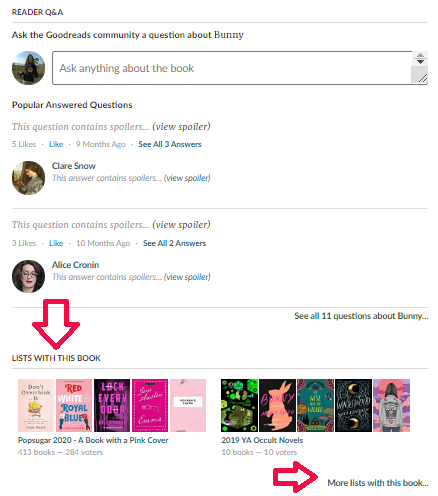
A visit to the profile page for one of my favorite 2019 releases, Mona Awad’s Bunny, brought me to this list of lists below, and one in particular jumped out to me.
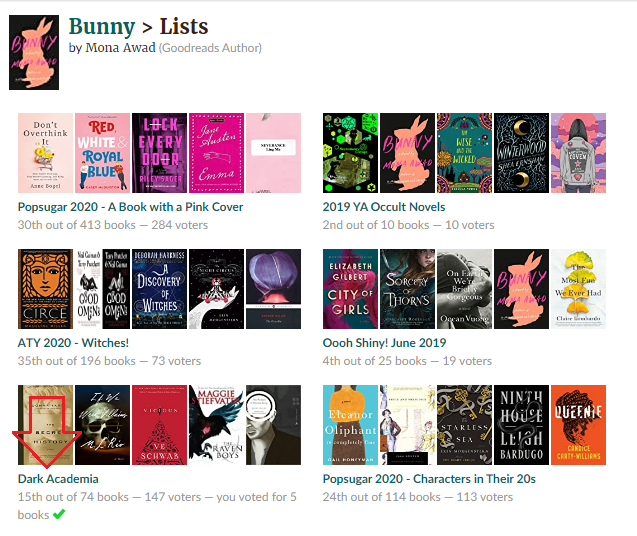
I knew I had struck gold because it featured several titles I’d already read and loved, including The Moth Diaries and Hangsaman. A Goodreads shelf search for the term returned even more results that sounded right up my alley.
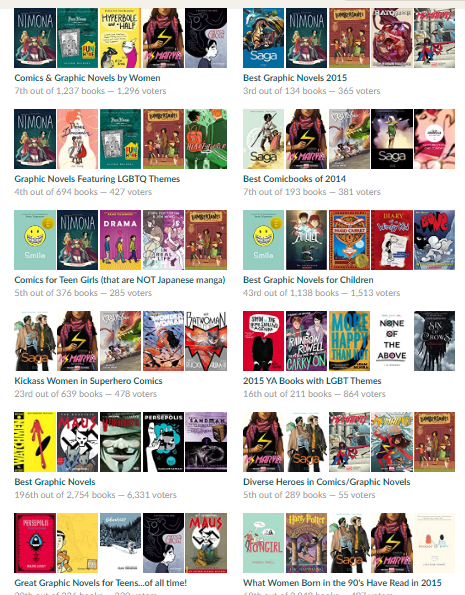
However, this method does use community-generated products and is subject to human error and frustration. For one, anyone with a Goodreads account can add to any list, but you need to put in a request with a Goodreads Librarian to remove any title not added by you, even if you created the list originally. (This is how my Wrestling Comics list ended up with a bunch of floppies and pretty much every Boom! Studios WWE TPB.) Going through popular categories (LGBTQ, Romance, YA) will turn up a lot of similarly named lists with very similar contents. For example, the list of lists featuring the first volume of Lumberjanes is more or less eleven pages of this:
I try to go through titles that weren’t noted as smash-hit bestsellers but still got decent coverage. I also keep an eye out for either ultra-specific or unfamiliar themes. Mary Shelley in Middle Grade Fiction? I didn’t even know that was a thing. Best Books of the 1890s? Dracula was published in 1897, so yeah, sure, why not. Witchy Picture Books?! Oh, adorable, perfect!
Searching for older comics this way can be tricky, though, since “comics” often get shelved and listed into nongenres such as “Sequential Art” and “Manga.” Less reviewed books are also less likely to be added to lists, especially when it comes to indie and small press titles. I still haven’t been able to find a follow-up read that scratches that itch for graphic memoirs about teenage webmasters, and I’m pessimistic about my chances of finding a satisfying number of graphic novels narrated via user interfaces.
It’s been a decade since I read Frankenstein, and I don’t recall it taking place on a college campus, nor was the protagonist a brooding freshman girl, but I’d certainly agree that it hit those Dark Academia vibes. (I mean, what is a graduate thesis but the self-aware manifestation of academic hubris, run amok? Wait, maybe I’m on to something here.) And I think those vibes are what I appreciate the most about Listopia and themed book lists in general. Despite the extra work digging through it all, I find the sometimes randomness of community-generated recommendations, the loose, wild, and weird associations we find between books (even if only at the surface level) so much more more reliable, exciting, and captivating than any algorithmic suggestion.
 SpiderHouses