I graduated with my Master’s in Publishing last Saturday. This meant one major life change for me:
My excuse of “I need that for my thesis” would no longer fly with my boyfriend, and I finally had to start throwing out the marketing artifacts —six promotional tote bags worth of the stuff— that was scattered across our coffee table, living room floor, bookshelves, and kitchen table.
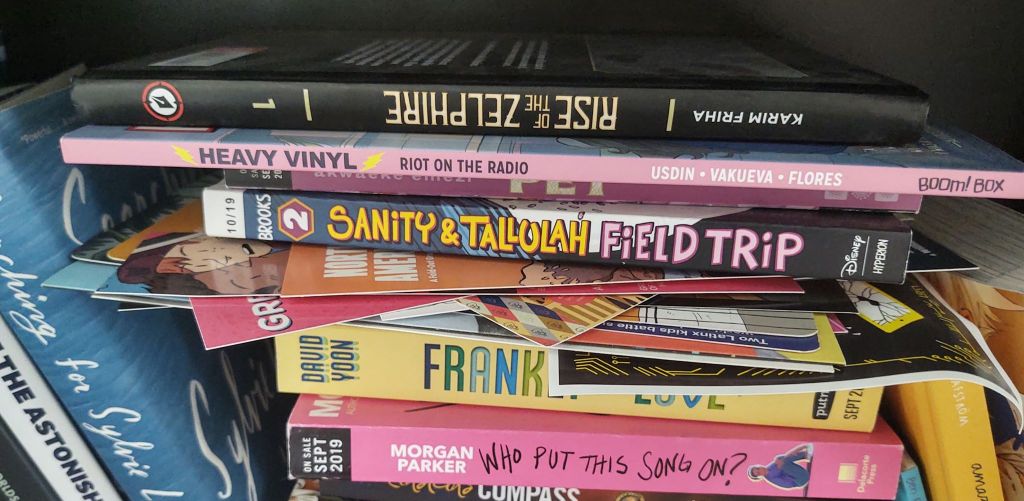
This is not to say that I threw all of it out. My thesis capstone was a two-year journey, and I’ve become attached to some of the . As I was emptying those totes, I found the three items from BookExpo 2018 that first inspired me to do a capstone thesis on library marketing.
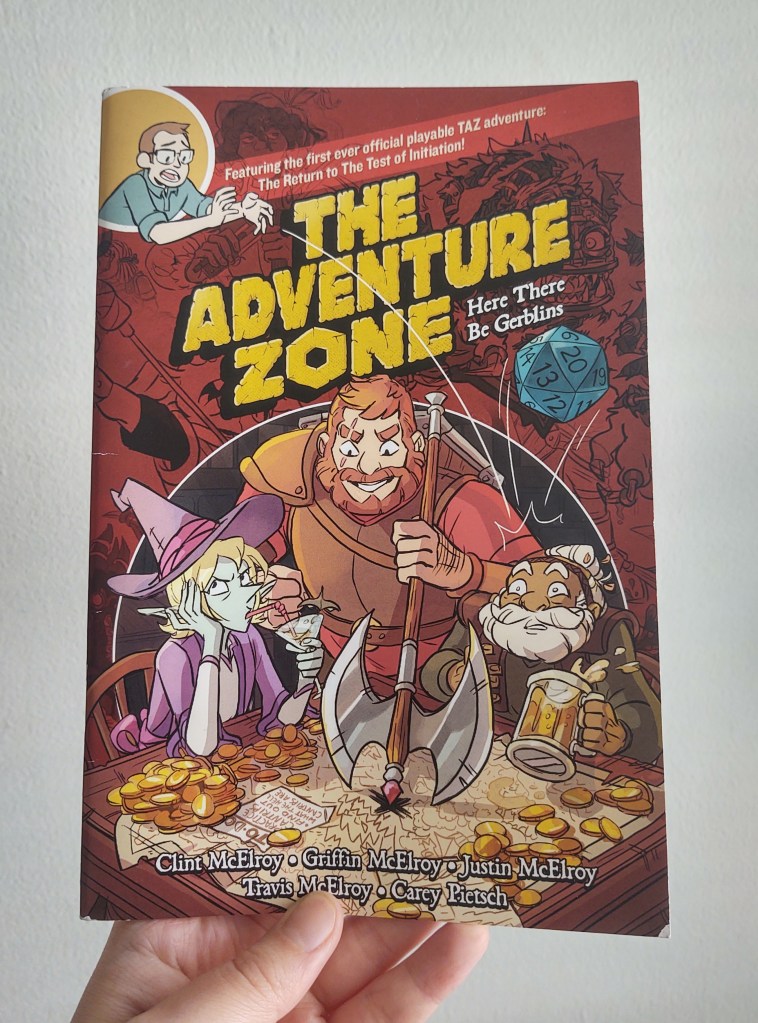
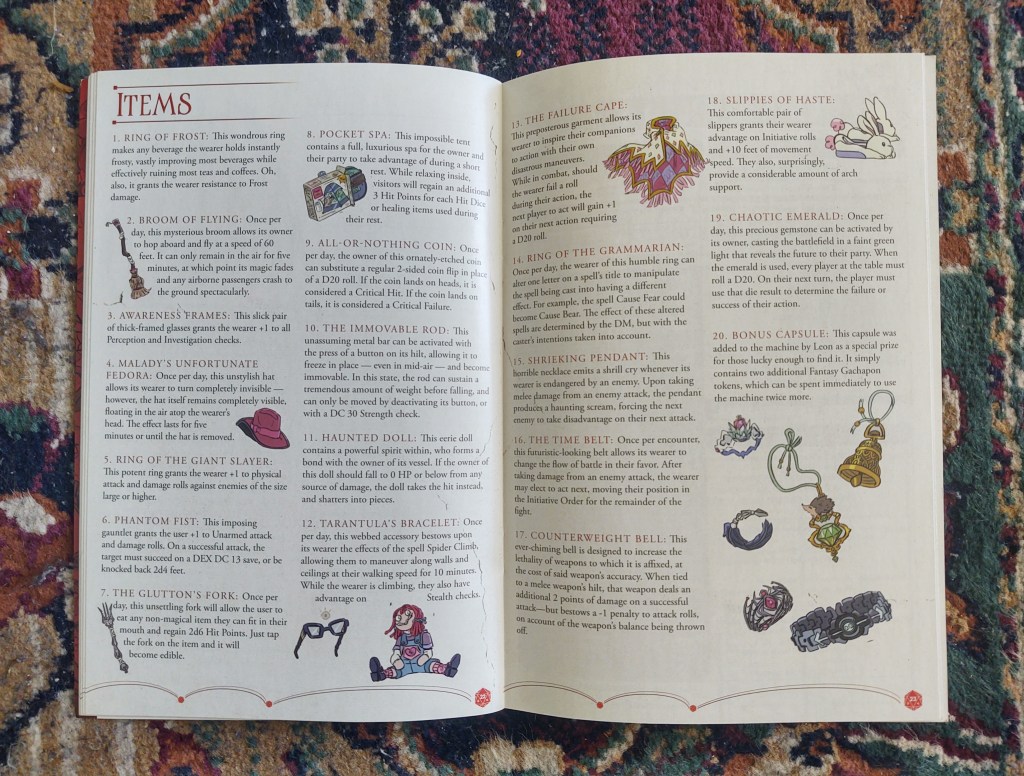
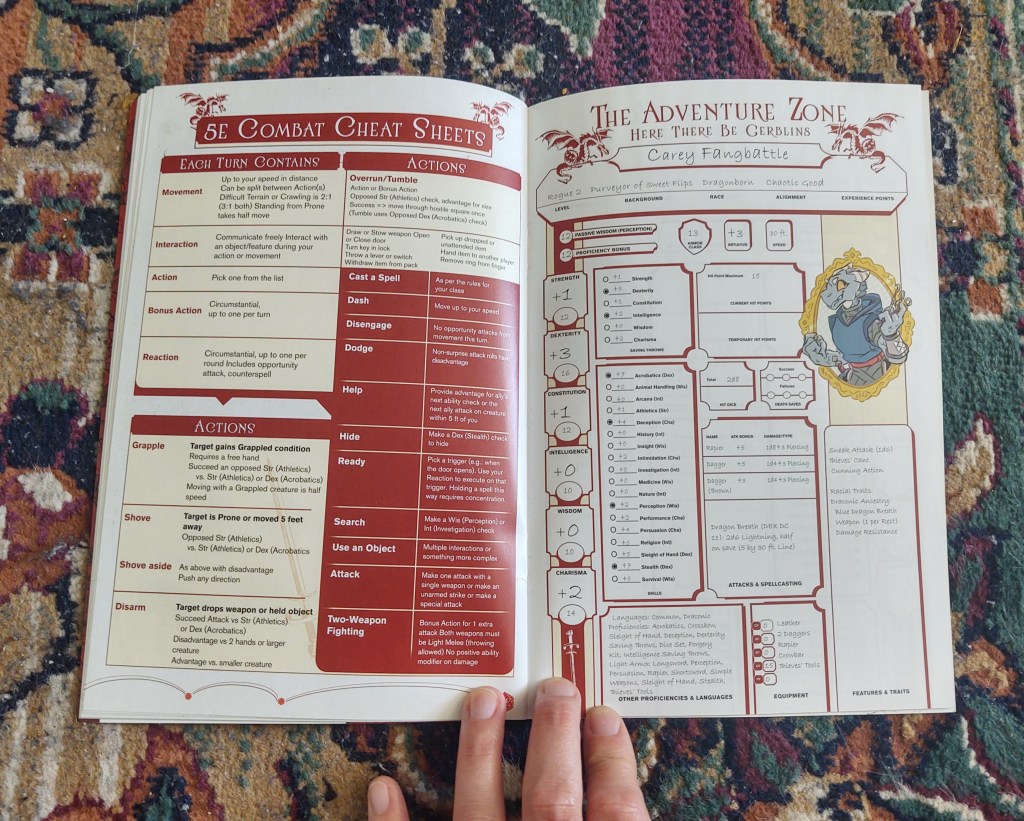
I didn’t get very far in the TAZ podcast, but I knew a few people who loved it, so I made sure to stop by a booth outside the main exhibit floor that was handing ARCs and couple other fun extras. At first, I thought this booklet was just a chapter preview they were trying to get rid of, but it turned out the be a campaign guide with character sheets and an glossary.
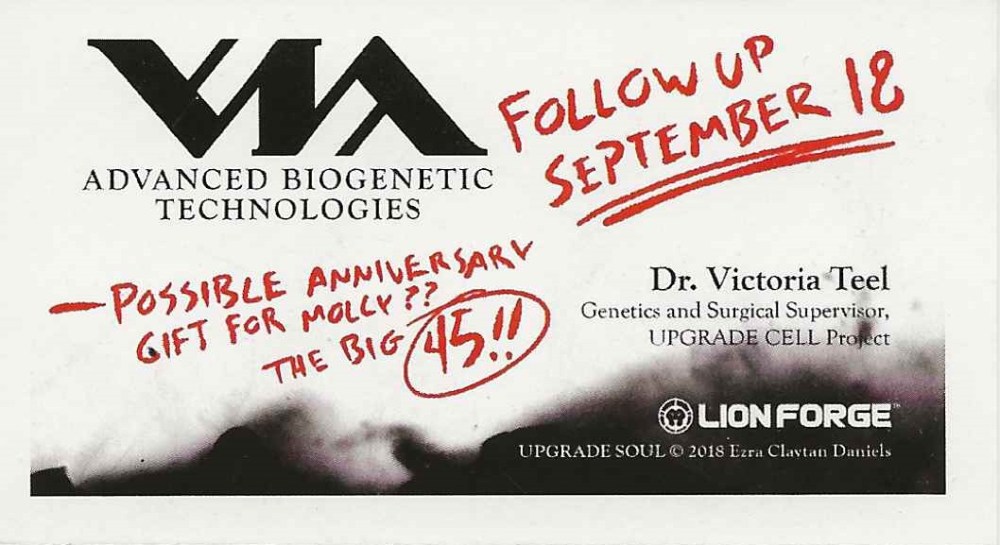
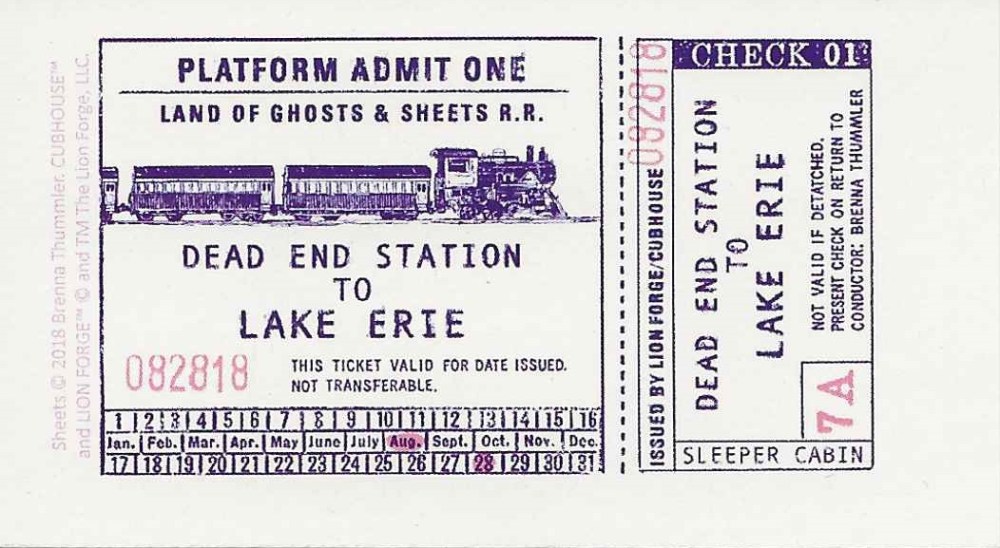
These little “business cards” from Lion Forge were unlike anything I’ve seen. The first, promoting Ezra Claytan Daniels’ Upgrade Soul, is supposed to be the business card for one of the book’s fictional doctors. The “hand scribbled” note about the follow-up date – September 18th – was the release date for the Lion Forge edition. (The comic was originally published as an app and then released in four print issues with Radiator Comics.) The second uses the convenient business card size to make a train ticket from Sheets. This little ticket packs in a ton of book information. The trip date, August 18th, is the book’s release date. The train company name incorporates the book title and “ghosts,” a major plot point. The issuer is the publisher and Cubhouse, Lion Forge’s children’s imprint, and the conductor is “Brenna Thummler,” the book’s author.
What captured my imagination about these pieces is that they went beyond their primary functions as carriers of book information (title, author, release date, synopsis etc.) and offered an immersive component. From then on, I was on the constant look out for promotional items that had multiple functions – a decoration, an activity, a game, a conversation starter.
My section on paper marketing materials ended up focusing on three specific kinds of marketing materials – bookmarks, postcards, and discussion guides – and the examples I used reflected that focus. But I also came across loads of other really cool objects of book promotion that didn’t fit neatly into these categories.
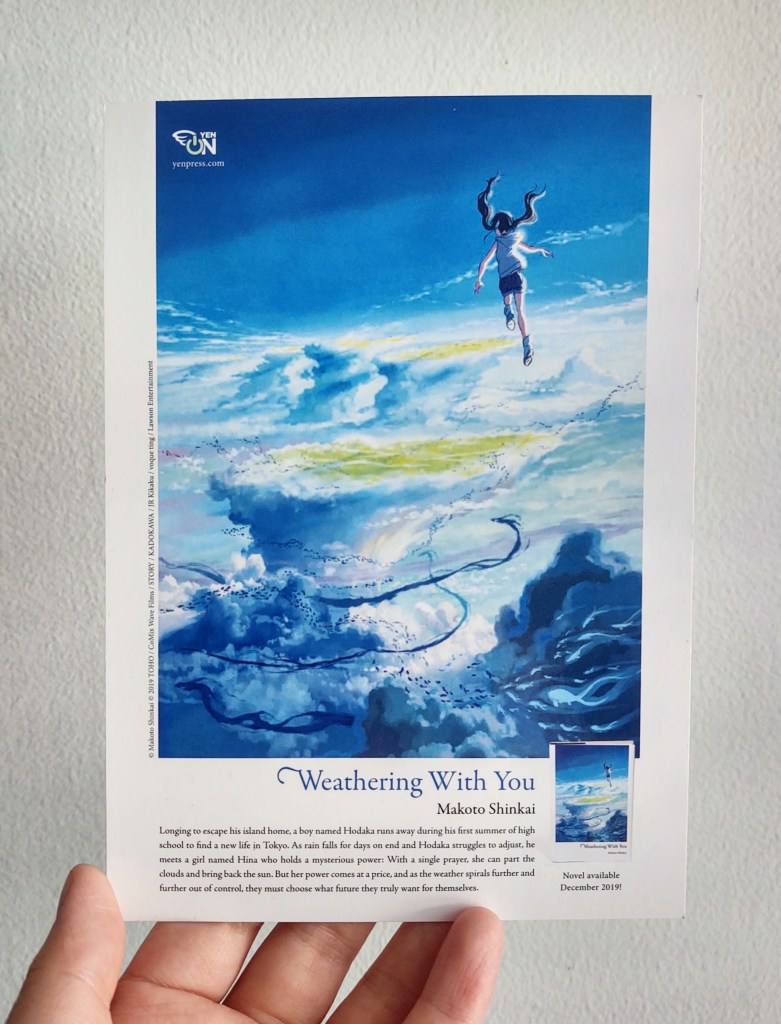
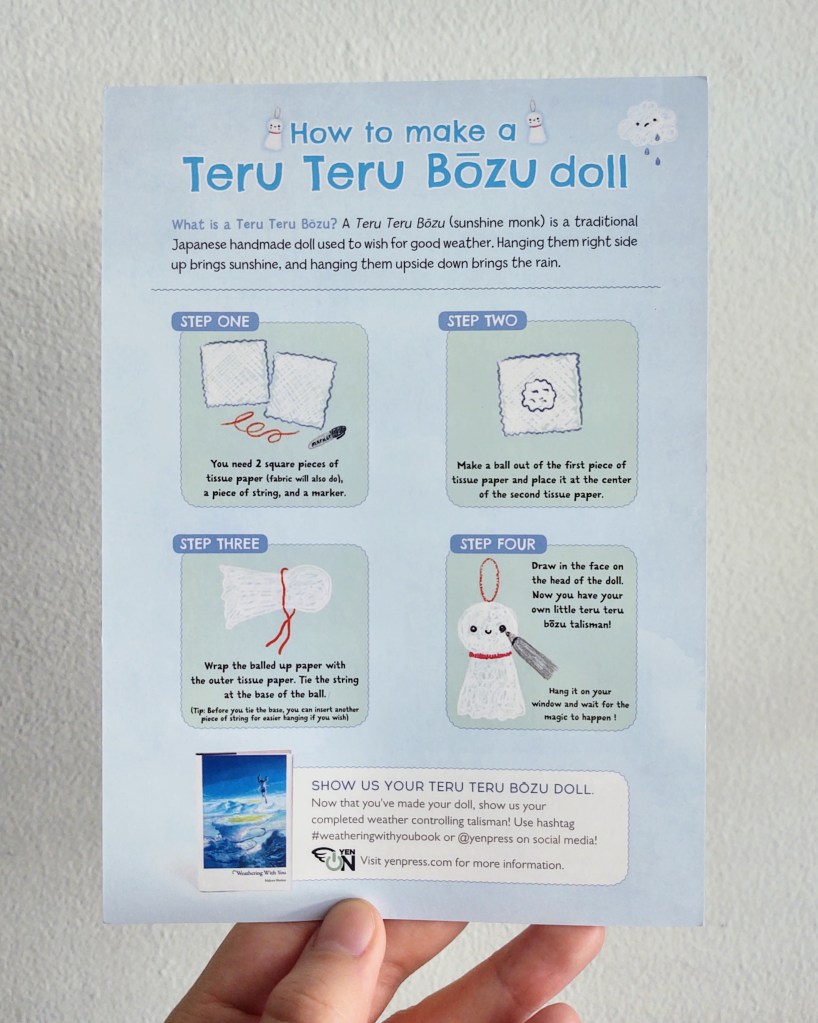
I got this Weathering with You card from a Yen Press booth. At first glance, it looked like the usual Yen Press marketing cards I’d seen previously at BookExpo and ALA Annual – glossy print, book cover on the front, buying info on the back. So I was delighted to turn it over and find instructions on how to make a teru teru bozu. I haven’t read (or watched) Weathering with You and don’t know if a teru teru bozu appears, but I do know the story is about a girl who can control the weather, and this activity is a sweet way of illustrating that theme.
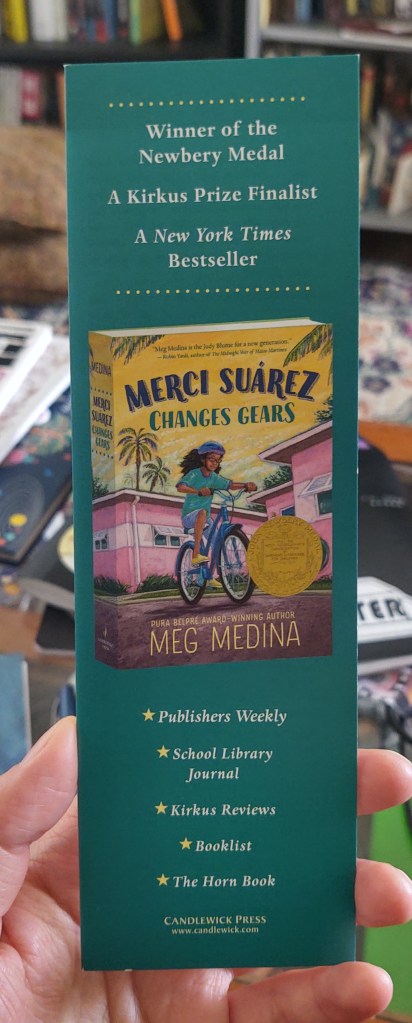
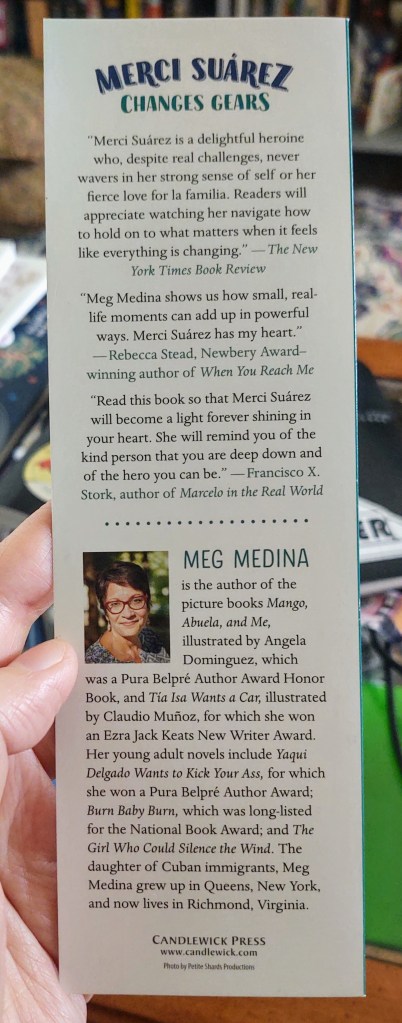
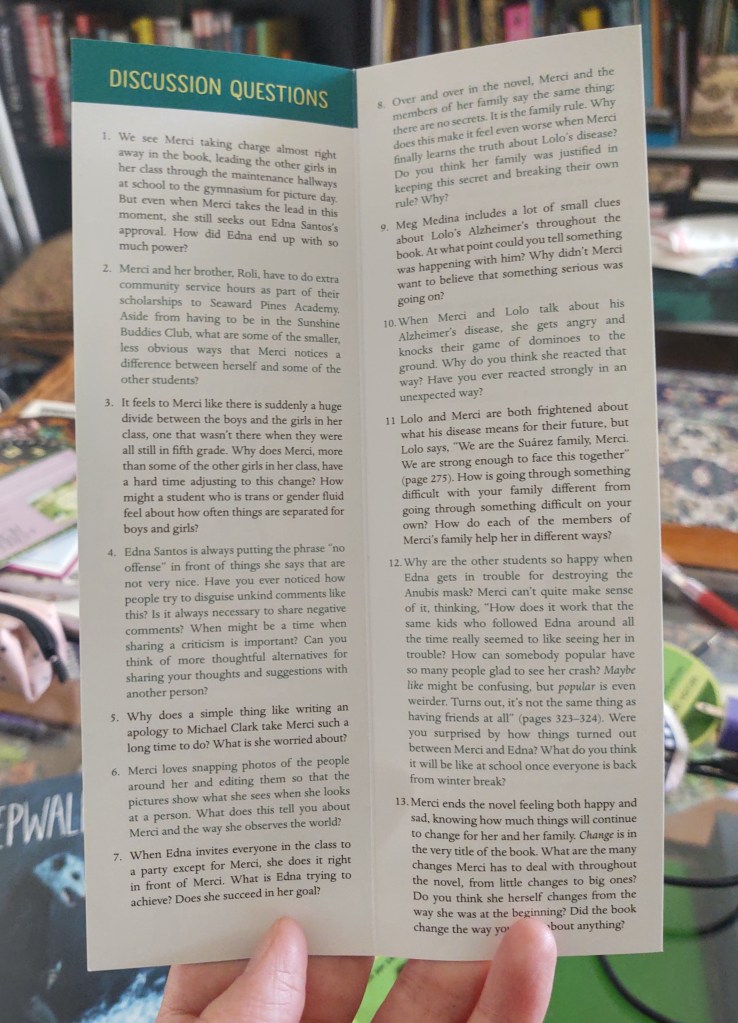
There’s this bookmark from Candlewick Press that I really really wanted to include this in my thesis analysis but didn’t because, uh, well, when the time came…I couldn’t find it. (Did I mention that I had probably over 100 marketing artifacts in various tote bags dispersed throughout my apartment?) From its display stand, it looks like the usual promotional bookmark with basic key specs: cover image, blurbs, accolades, author profile, publisher site, etc. But then you pick it up and realize it unfolds into a lengthy discussion guide. Concise, informational, and multi-functional, ingenious, I love it!
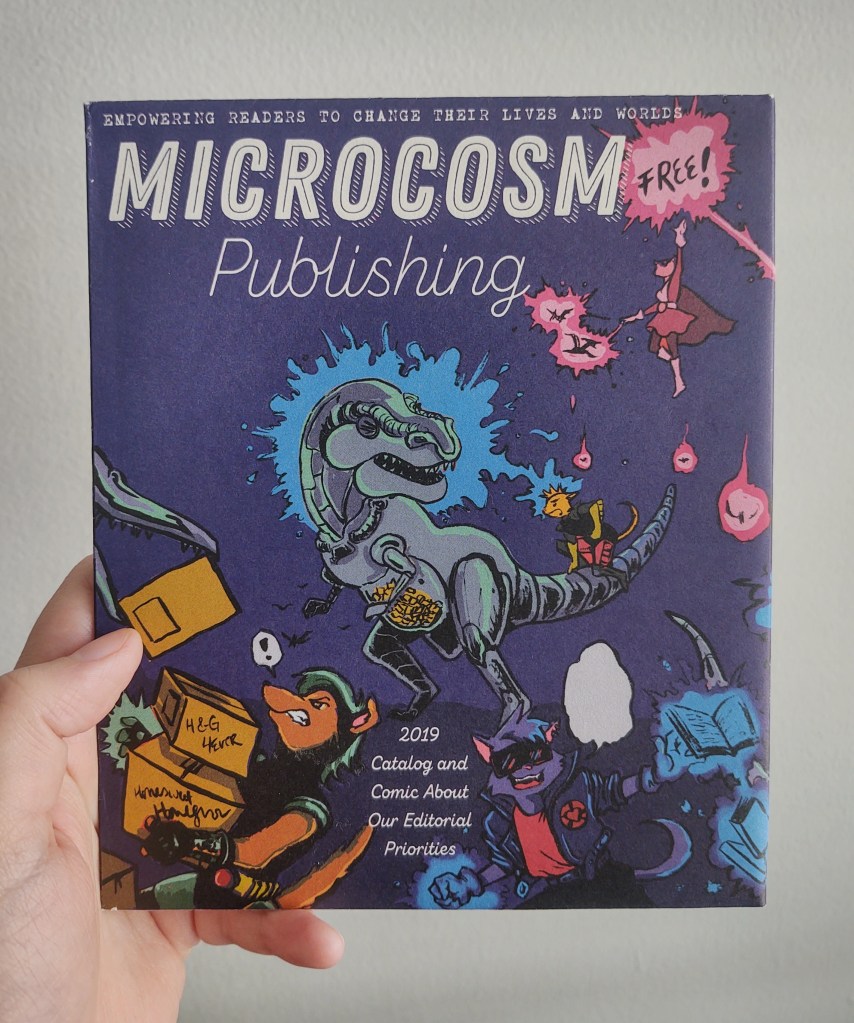
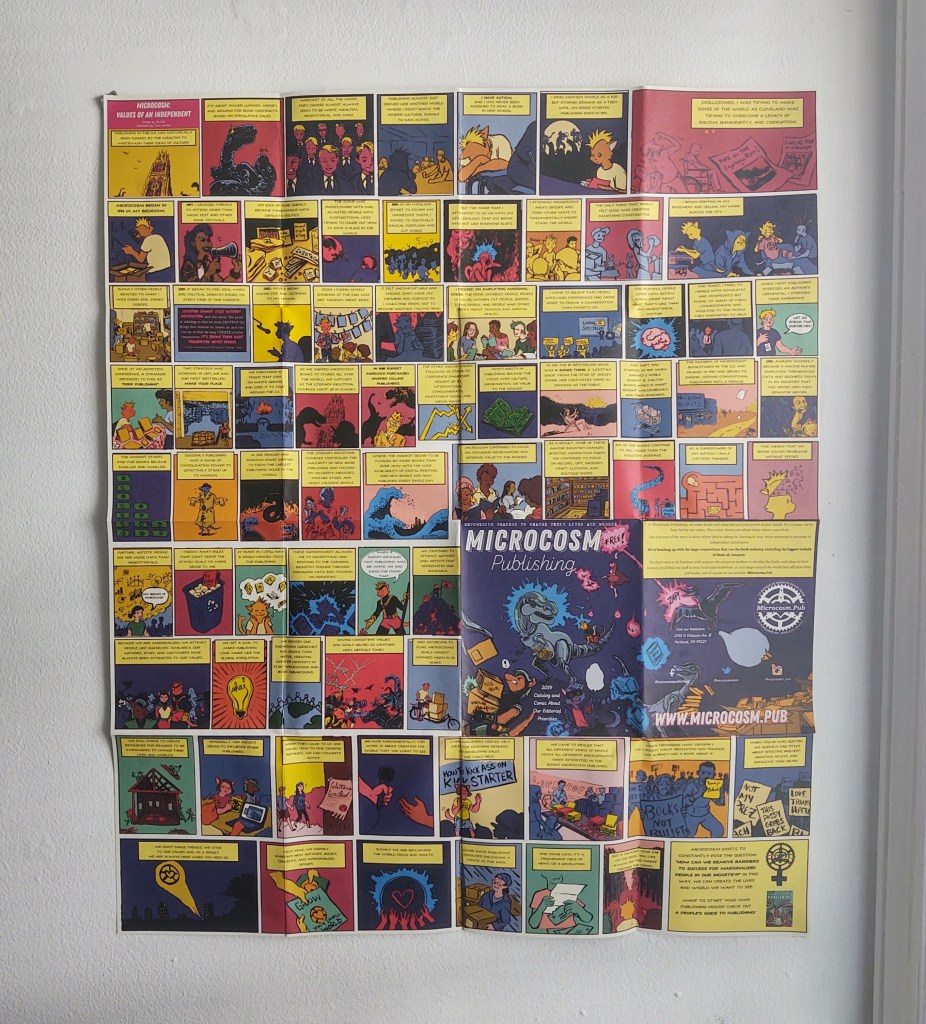
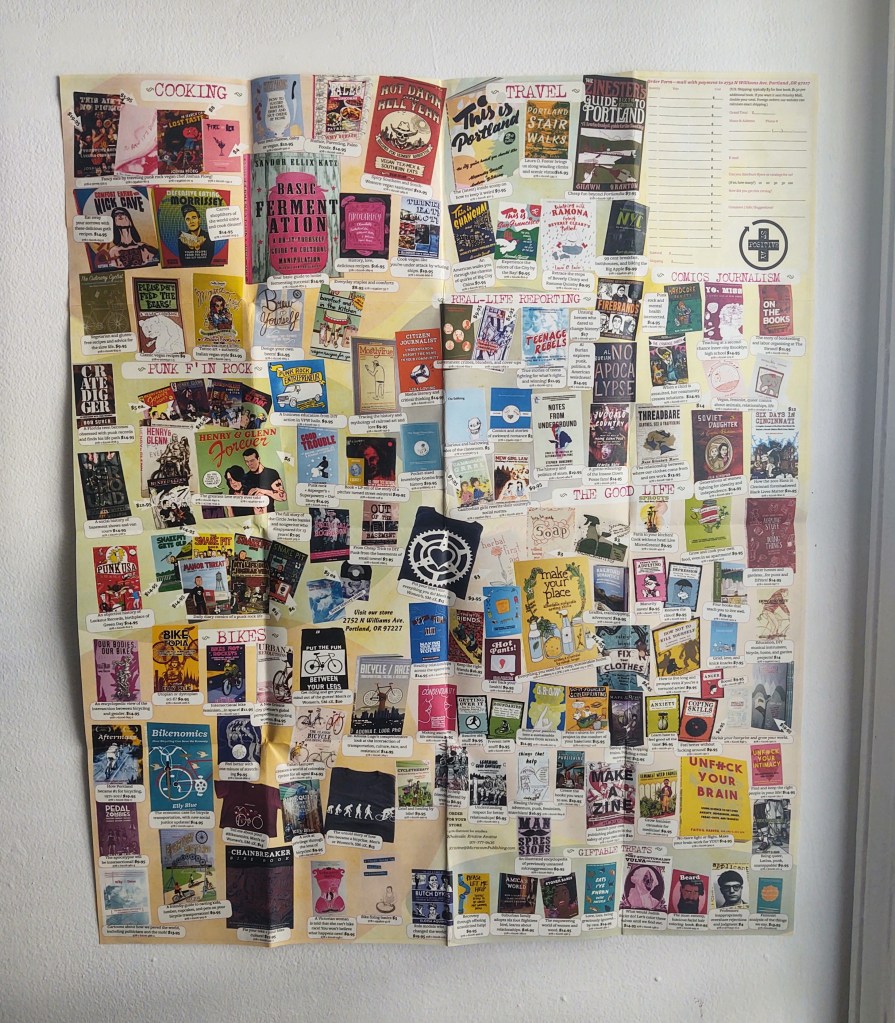
The one time I bought a book from Microcosm’s website, they sent my order with seemingly every piece of marketing literature they had laying around. The only one I really looked at was this poster. The front is their mission statement told in a comic format and the back is their catalog with an order form. It’s a lot of tiny text, but the colors almost tempted me to hang it up permanently. Either way, I’m keeping it around.
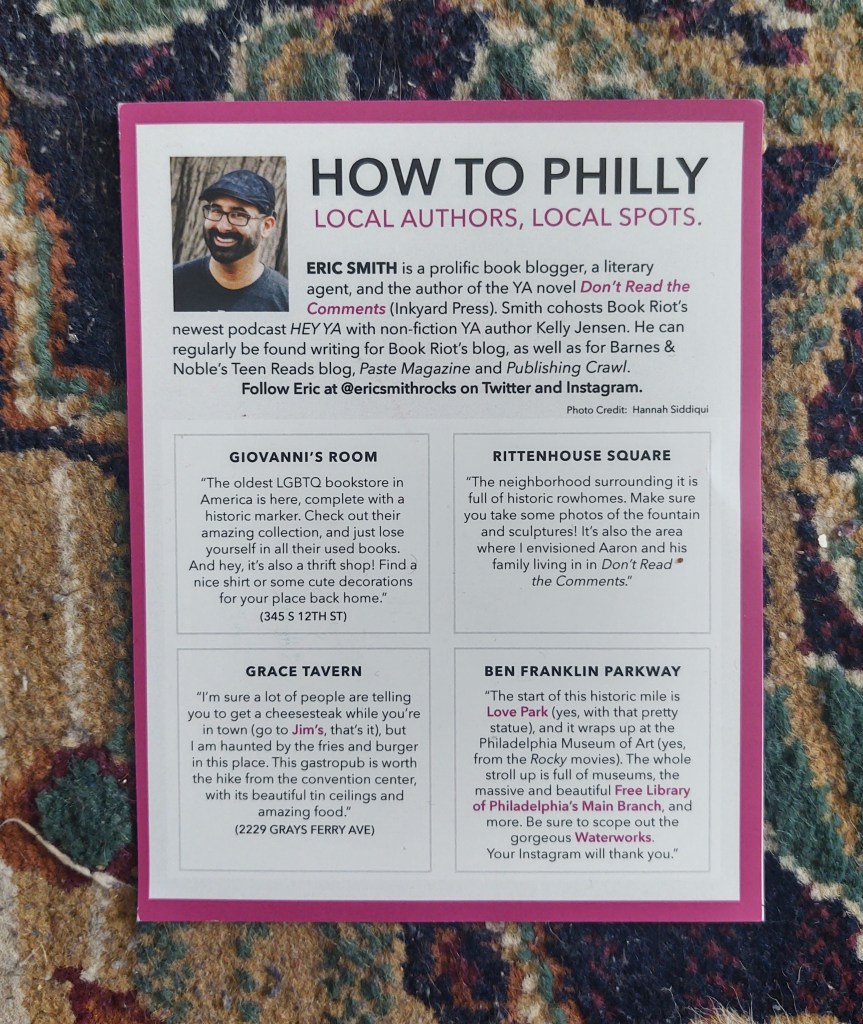
And this card was found on the floor of the Pennsylvania Convention Center exhibit hall. Judging by the book imprints mentioned (Inkyard Press for Eric Smith, Park Row Books for the author featured on the other side, Pam Jenoff), this probably came from the HarperCollins booth. What really struck me about this flyer was that the publisher feels mostly absent from it, especially since the redirects are to the authors’ social media accounts. The main focus of this promotion seems to be building a kind of trust between the reader and the authors. “Go on an adventure. Try out our suggestions. Have a great time (because you will), and then read our books.” And let me confirm as a native Philadelphian, their suggestions are excellent.
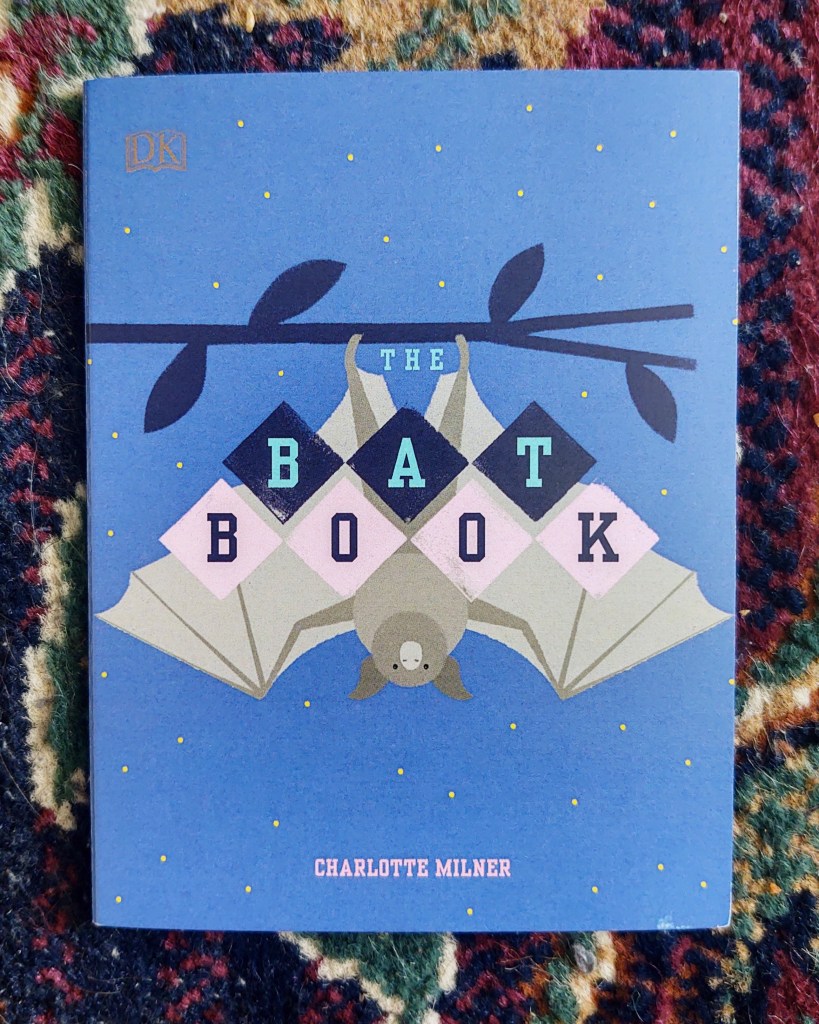
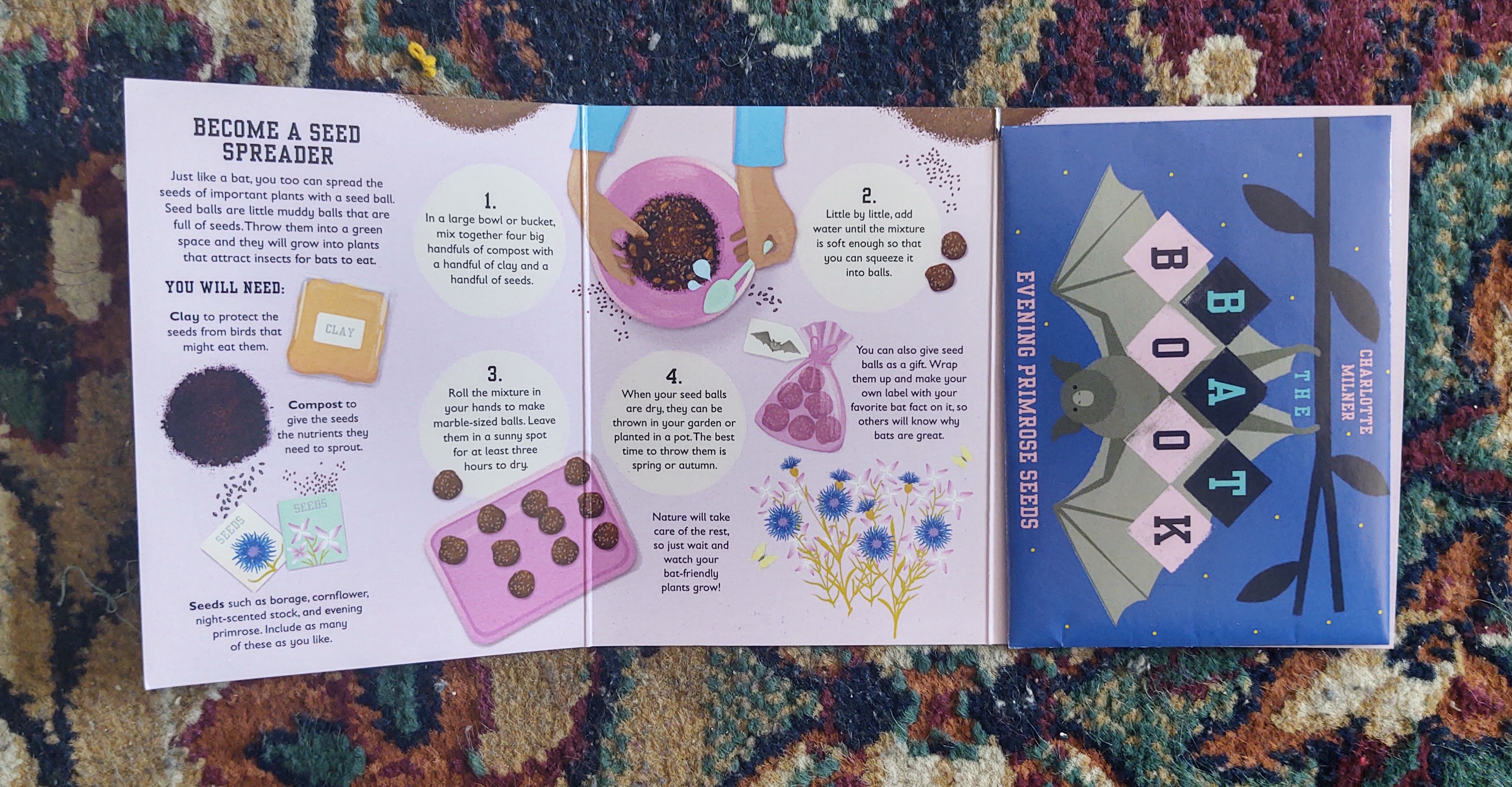
I would say that 90% of the stuff I found went into the recycling. Anything I kept was either directly related to my thesis or had some kind of practical use. For example, this little pamphlet I grabbed from DK’s ALA Midwinter 2020 booth. I love bats, so I didn’t really care what was inside. I assumed it was just preview. Instead, it was a packet of seeds with a planting activity. I am very, very bad with plants, but everyone knows someone with a green thumb. Sure enough, I passed this on to a family member.
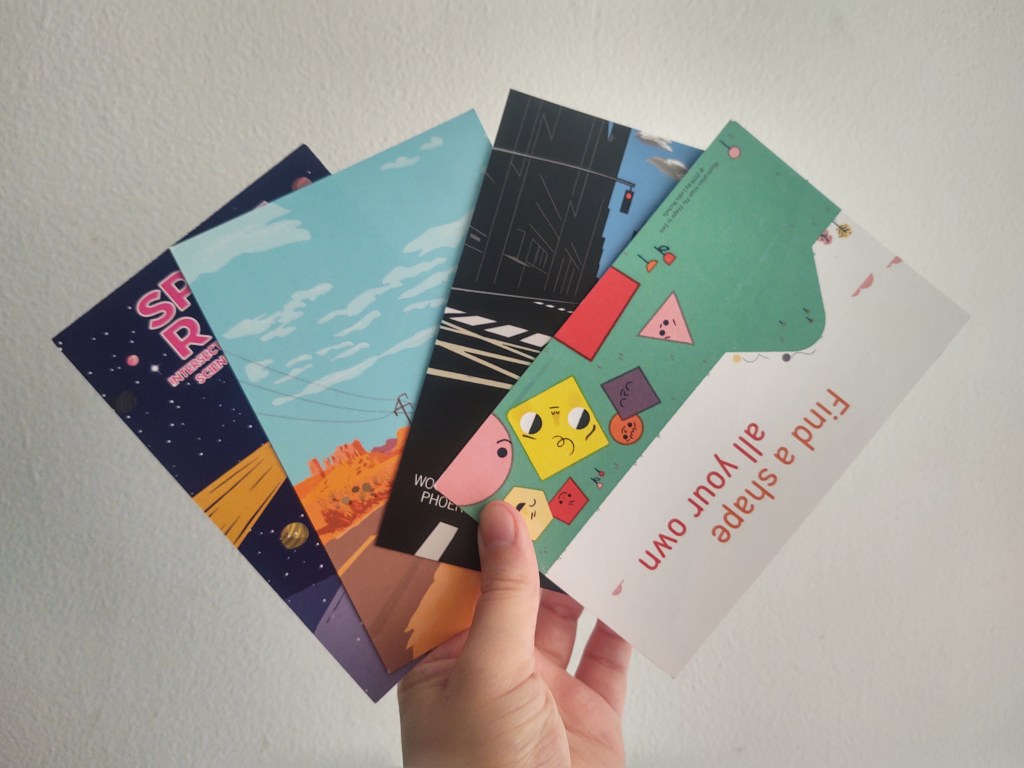
Just like images and words on social media, paper promotional items can have shareable value. Leave some blank space on the back of a 5×7 promotional card, and I WILL use it as a postcard. Even before I finished writing my thesis, I was slipping stickers and pamphlets in with letters to friends who might appreciate them. And I think that’s the promotional design jackpot – marketing that inspires sharing. I bet in another two months I’ll start including some of the bookmarks I kept with my personal letters.
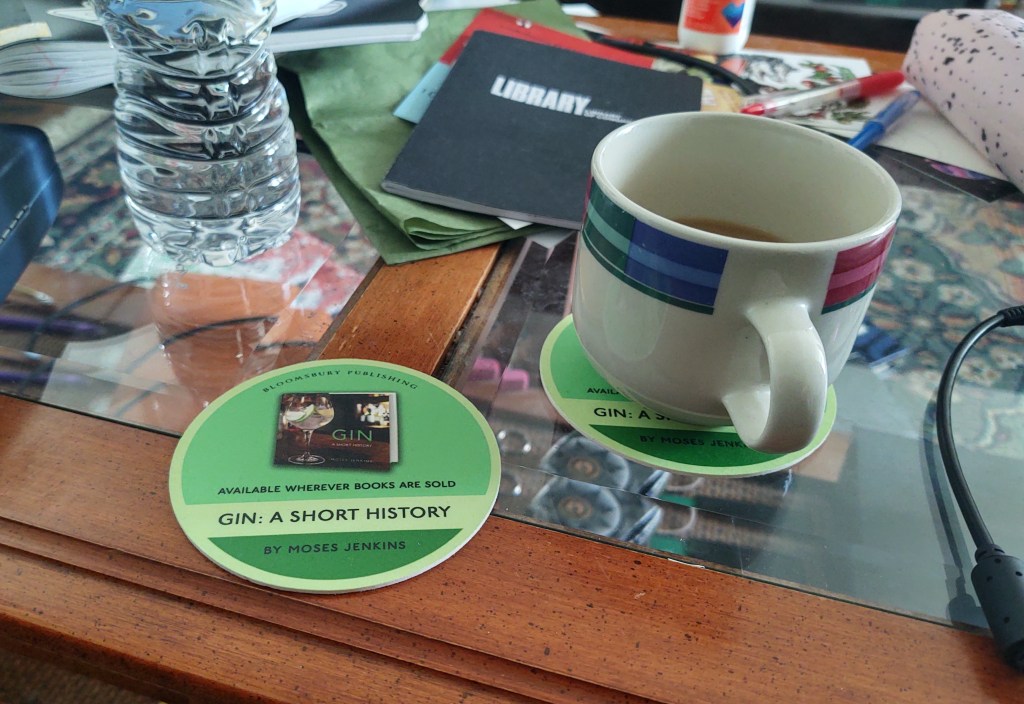
But not the coasters. I’m keeping the coasters for myself.
 SpiderHouses