If you give a publishing graduate a gaming laptop, she’s going to ask for a gaming mouse. When you give her the mouse, she’ll probably ask for, uh, somewhere to work during the day that isn’t the living room coffee table.
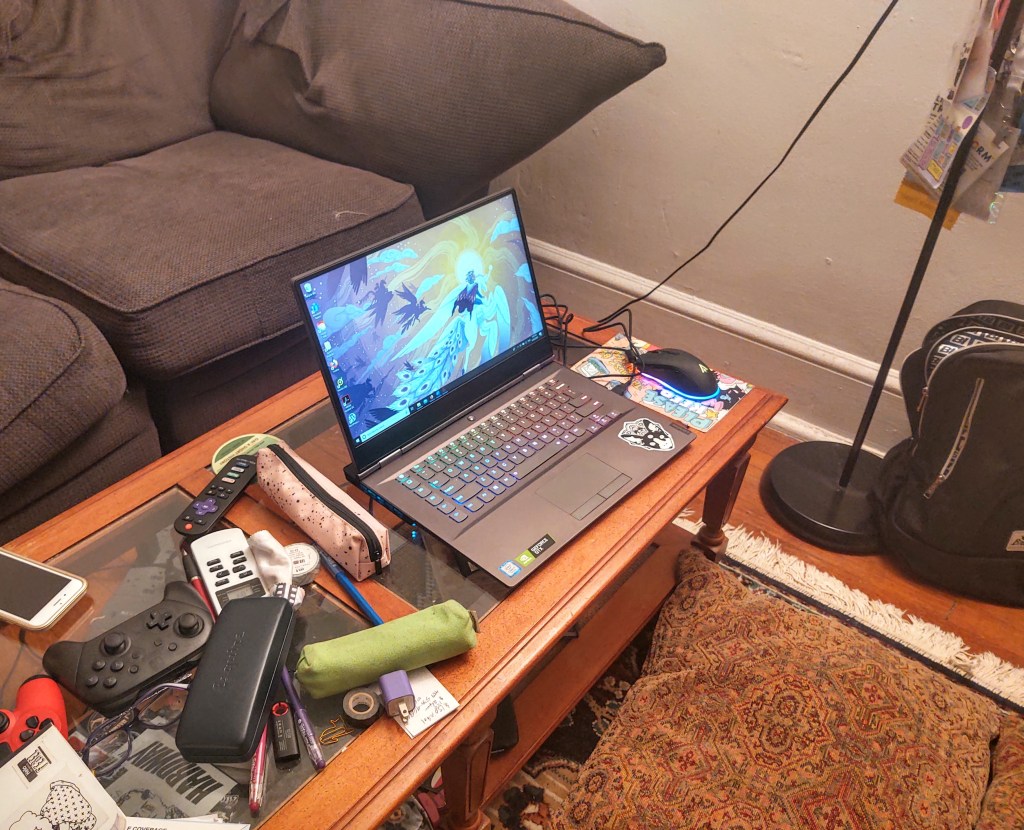
No, I’m not becoming a gamer. I chose this laptop is because I wanted to be able to use Adobe Creative Cloud from home. And now that I have InDesign, I can finally finish what I set out to do eighteen months ago when I started my Master’s capstone: design a discussion guide for Weird Me.

I use “discussion guide” here as an umbrella term for any kind of promotional activity pack that includes a discussion element. For example, Scholastic’s “teaching guide” for Raina Telgemeier’s Ghosts opens with discussion questions but also includes a lengthy list of activities. It essentially acts as a lesson plan from which teachers can pick and choose according to time constraints and classroom needs. The teaching guide webpage also features a list of Common Core Standards covered in the activities. As fascinating as these are, I do not have formal teaching credentials, and my understanding of Common Core is limited to the brief overview I got in a School & Library Publishing class.
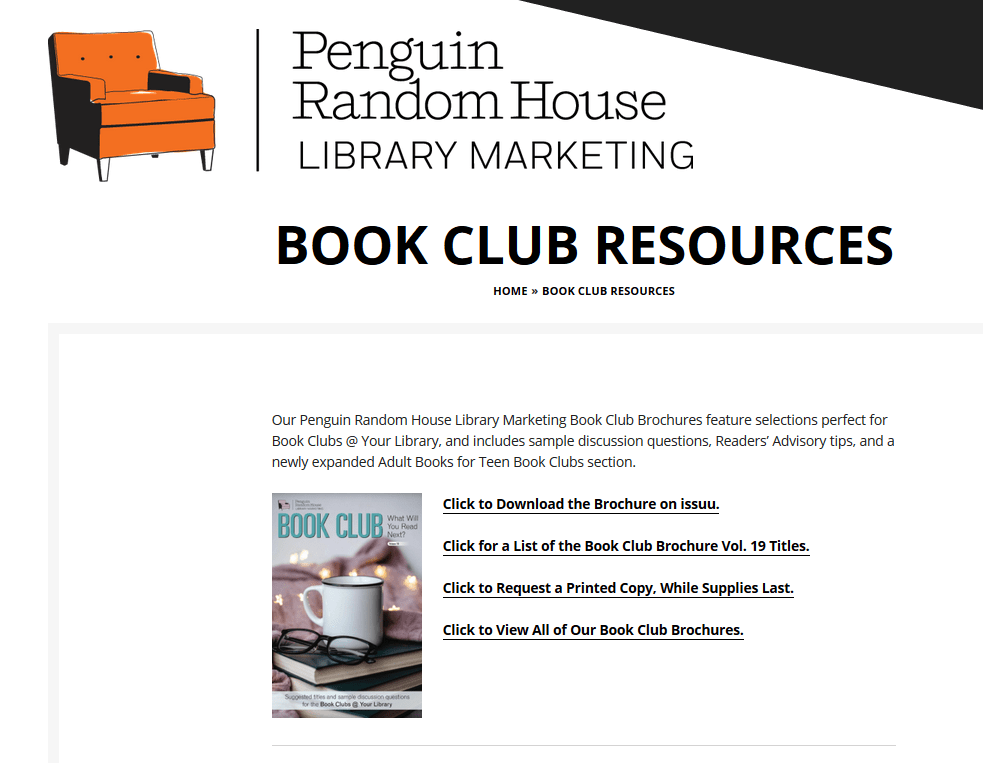
Then why are discussion guides worth exploring within small press comics? Many publishers have already incorporated discussion guides into their library marketing. Guides are popular with teachers and librarians because they cut down on classroom and programming preparation time. Likewise, discussion guides for comics targeted at adults can help quell the anxieties of book club organizers who might not be familiar with or confident working with comics. Guides are also independent of distribution services and review publications, two factors that often influence book marketing opportunities. For a small comics press or self-published cartoonist, the only real obstacle is finding the time to make one. Even then, guides can be however simple or fancy the creator wishes. They can be made in a word processor with a few color graphics or be a collection of elaborately designed layouts. They can be a straight-forward list of questions or a full day’s worth of activities. And while finding the time to make a guide might the difficult, the guide itself is not time-sensitive. It can be applied to backlist titles or updated to reflect current issues and events. The hyperlinks above are a good starting point for understanding what kinds of questions might be used in a guide, and hoopla Digital’s Book Club Hub archive also has some great examples of ways we can adapt discussion questions and activities to appeal to adult readers.
With so much flexibility, it’s worth exploring how we can create discussion guides that support independent comics, especially small press publications. Here are some initial questions for us to consider:

- Who is the guide for? Is the guide for comics fans, people new to comics, or a mixture of both? Is is for an independent reading group, or a library-run book club? Will the readers appreciate a glossary of comics terms? Should there be substantial questions about the comics medium, or will the readers prefer to focus on the plot? Should you include prose in the recommended reading list? The answers to these questions will help you decide what kind of content you might include.
- Where will it be published? If you try searching around for discussion guides outside of the ones I linked to above, you might notice that publishers tuck them away into all kinds of corners. Sometimes they’re under a clearly labeled “Resources” tab. With larger publishers (e.g., Macmillan), you might have to click through three different menus to find a link to a catalog search that brings up all relevant titles. But for small presses with a simple, clear website layout and only a handful of webpages, it’ll probably be easier to post guides in a conspicuous location. If you’re planning on creating multiple guides, you might want to create a separate page for all of them. If you just one to showcase one title as a potential book club pick, maybe you can feature it on a sidebar menu.
- How will we distribute it? In my experience, comics are a very event-focused industry. In the past, it probably would have been pretty easy to hand out physical guides from a merch table alongside bookmarks and business cards, or even leave them on the freebie table at, say, SPX. But now that many comics events are being moved online, we will have to evaluate what digital channels are available. If the guide is being hosted on a publisher’s website, the it can become part of whatever other promotional content is being posted on the publisher’s social media. If the comic is self-published, promotion might be a bit trickier and would depend on whether the creator is participating in any virtual events.
- Who/ what else will we be promoting in our guide? Note how at the end of the Ghosts guide, Scholastic includes questions about Telgemeier’s other books. hoopla, too, has a “Recommended Next Reads” list. Discussion guides are an opportunity to give a shout out to creators working in conversation with your title’s topic. A Recommended Reading section can also help develop the comic’s branding. For example, for Weird Me‘s guide, I included lists of graphic memoirs, comics that feature music, and books that take place in a virtual space.
For small comics presses that publish zines and minicomics, discussion guides could also be an opportunity to collectively promote thematically-related comics. Guides for “packaged” collections can used as conversation starters for greater themes. But that brings up the issue of distribution, which is an entirely different topic I don’t intend on touching for a few more months.
So what do you think? Are indie comics discussion guides a worthwhile pursuit?
 SpiderHouses