A certain out-of-print josei series has prompted me to seek manga with a specific narrative theme. I’ve mentioned this series before on this blog, but to avoid beating a dead horse, I will wait a bit longer before I say its name again. But the theme I’m currently obsessed with is this:
Professional working women confronting the ways in which their job both enriches and disrupts their personal lives.
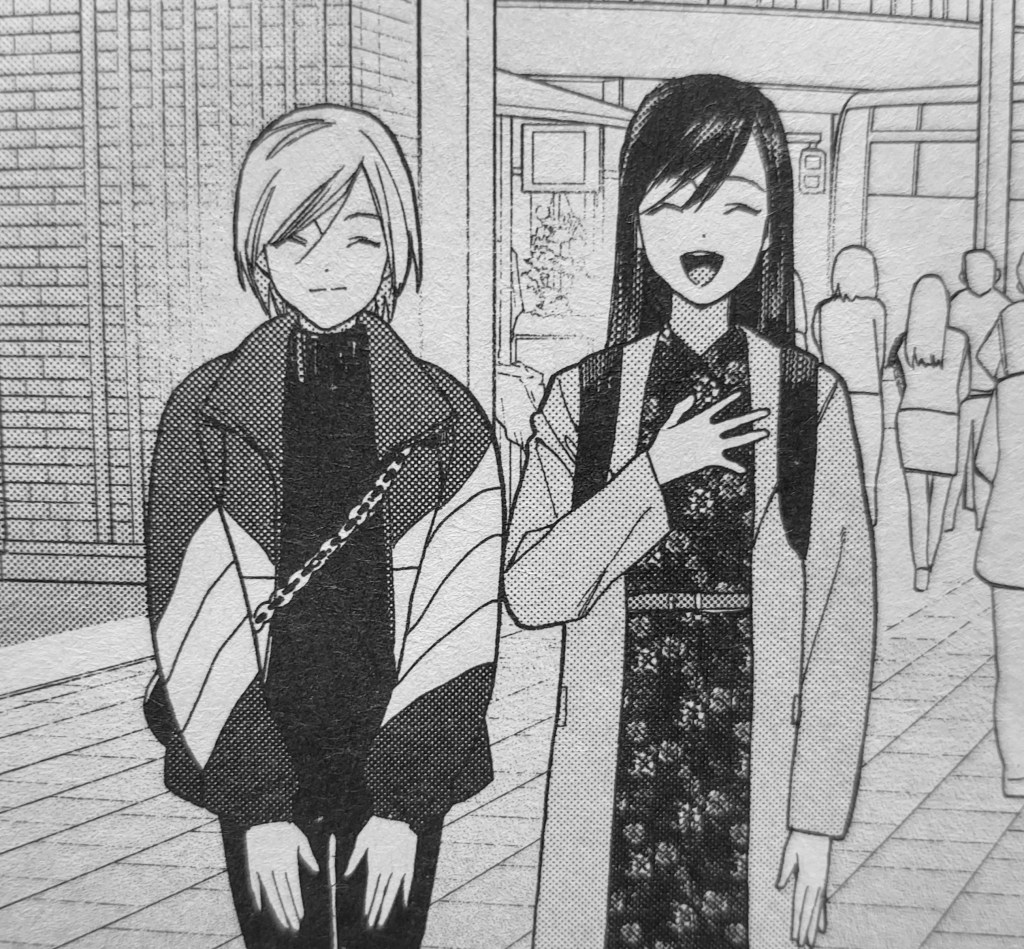
The conflicts in these stories can range from silly to serious, and high stakes drama – infidelity, mental illness, alcohol, etc. – is definitely not required in work-focused josei. For example, in Tamekou’s My Androgynous Boyfriend (Seven Seas Entertainment), the stakes always feel low. The series’ female lead, Wako, is working in Tokyo as a comics magazine editor. Her job is demanding and exhausting, and Wako laments how it interferes with her personal life. Nevertheless, she is a young woman able to ambitiously pursue a career, get paid to do something she loves, and have a secure, supportive romantic life. This is all possible because of the way Wako and her boyfriend Meguru, a social media fashion influencer, break from gender conventions.
Wako’s relationship with work
Wako’s job is high stress with tight deadlines and long days. Early in volume one, she reflects on a sudden decision to start dieting: “It’s this load I’m carrying. Doing next to nothing with my style. And all I do on my day off is sleep. I work so late, I barely cook or clean. And somehow, a girl like me got super-cute Meguru-kun.”
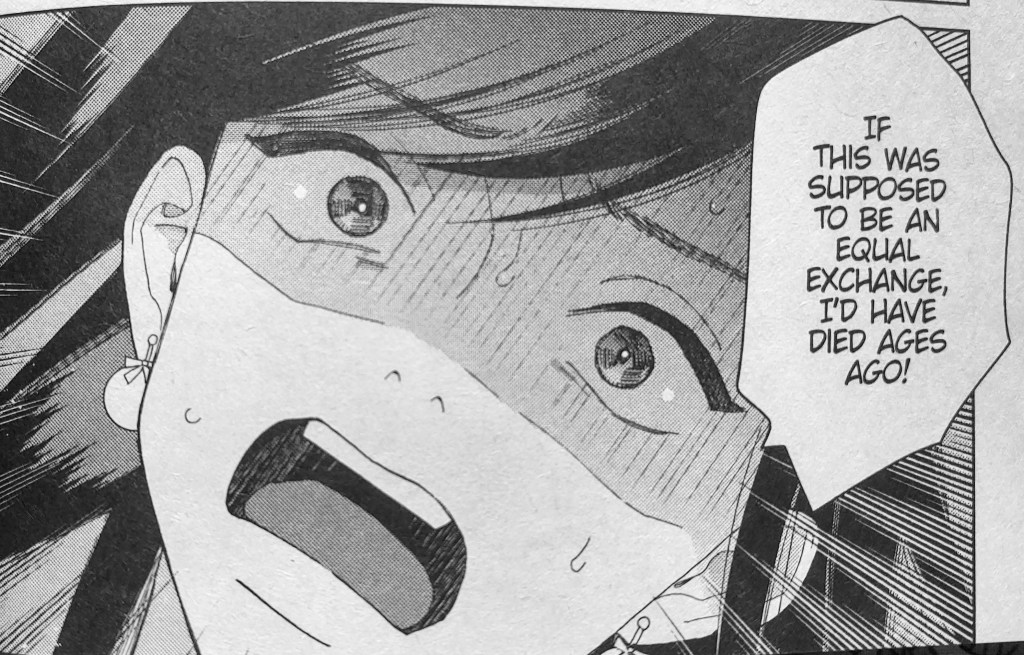
Two out of the three problems Wako lists– maintaining a personal style and doing housework – are gendered activities. The gendered nature of her perceived shortcomings is further emphasized by how she reflects upon herself as “a girl” instead of using the pronoun “I” and describes her male partner as “super-cute” instead of “handsome.”
Wako’s exhaustion interferes with her personal life. After finishing a rough proofreading job, Wako tries to reset her mood for Meguru’s sake, telling herself, “We’ve missed each other all week. I should pick up some cake on my way home. The cheese kind Meguru-kun likes. Surprise him, at least…be presentable, at least. Fix up my makeup, at least. Smile, at least.” Again, Wako turns to makeup — and her appearance– as necessary signifiers of her role as a “girlfriend.” It’s as if her editorial work strips away a part of her femininity. To her utter dismay, Wako returns home to find that Meguru has enthusiastically decorated in celebration of their seventh anniversary, which she had completely forgotten about. Wako self-disparagingly declares, “You do everything for me, and I never give back. I work all the time. I only think of myself. I’m so selfish, a total disaster of a person.” To Wako, professional successes are deemed null if she can’t be equally competent in her long-term relationship. Wako continues from the floor until Meguru placates her with some of the cheesecake she bought home for him.
The physical and mental toll of a deadline-driven job gives Wako plenty of opportunities to nitpick about how she conducts her personal life. In the real world, this kind of work-life balance might be deemed unhealthy, but Wako does not seem to be in danger of burning out. Personal editorial projects revitalize her spirit. When Meguru tries to take a selfie with Wako to distract her from her self-depreciating tirades, she whisks his phone away and tells him, “Just leave the editing to me! I’ll think up a caption, too!” Wako is trying to redirect Meguru’s attention, as she is very uncomfortable about appearing on his Instagram. However, she is genuinely delighted when her edited photo gets over five thousand likes. Wako’s excitement over editing Meguru’s content is most likely due to an emotional connection with the origins of Meguru’s online brand.
Origin of Wako and Meguru’s romance
The same passion for editing that lead Wako to her job also lead her to Meguru. In high school, she is inspired on sight by underclassman Meguru’s carefully curated beauty and urges him to try becoming a social media personality. At the time of this first meeting, Wako already has some understanding of all the production that goes on behind creating an online brand. She assures him that she already has the equipment at home and can take care of the editing. Wako essentially ends up launching Meguru’s media career. When Meguru thanks her for her hard work, she tells him, “But you don’t need to worry about me…I do it because I like it. I want to work in this field someday. You know—sharing awesome things with people.” Wako’s reveal of her professional dreams prompts Meguru to confess his feelings and follow her to Tokyo after graduation. Wako and Meguru’s teenage collaboration helped them develop skills key to their future occupations and brought them together romantically.
Meguru’s attitude toward Wako’s work
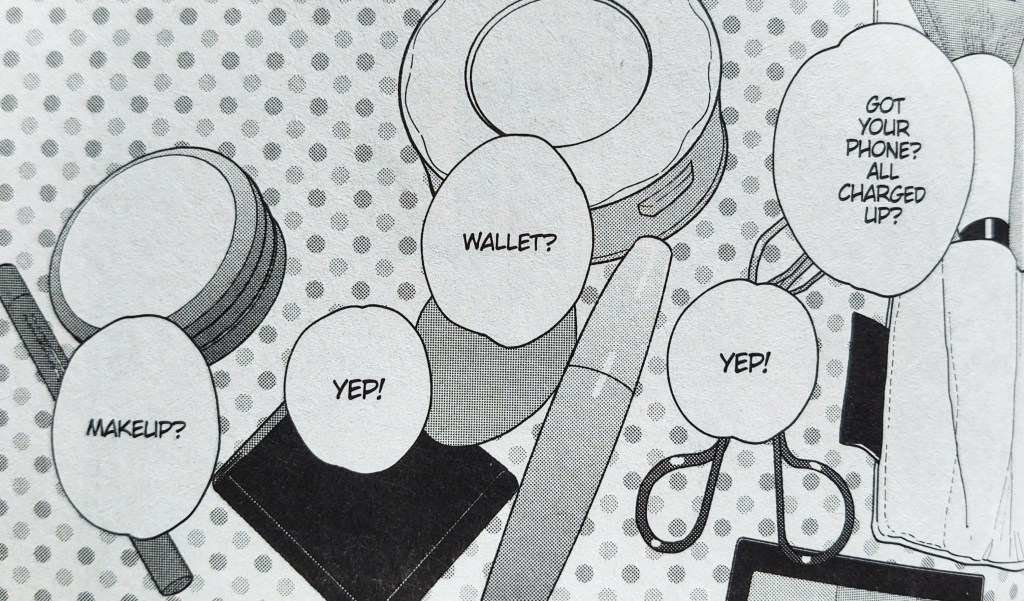
For all of Wako’s worry and guilt over her job, Meguru has just as much patience and empathy to match. He cheerily picks up household responsibilities such as cooking meals and shopping for household items. At the end of volume one, Wako is suddenly called to the office on her day off. Meguru rouses her awake, calls out a pre-commute checklist, then waves her off to work from the doorway. In other words, Meguru has adopted stereotypical “housewife” activities in Wako’s stead.
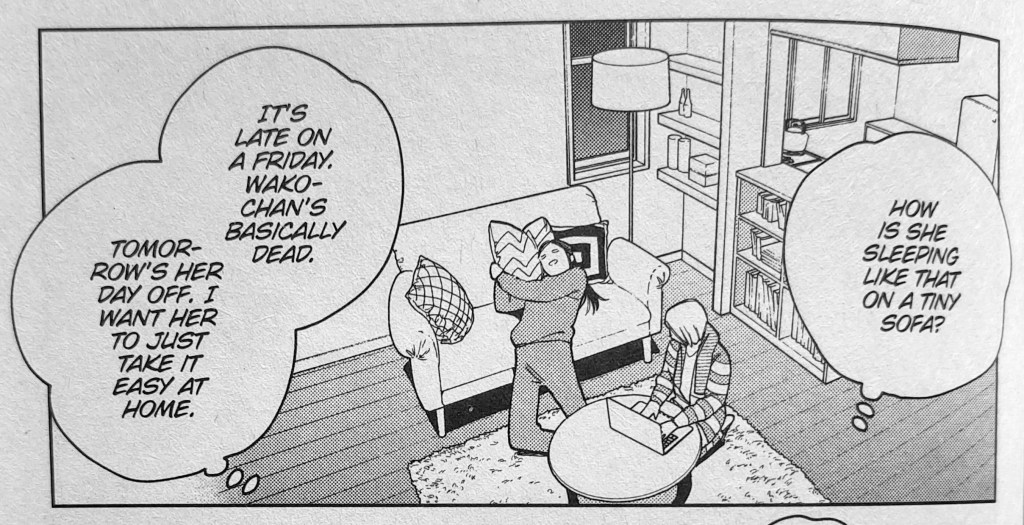
Meguru also provides substantial emotional support. When Wako mentions that she has a meeting with one of her favorite manga creators, Meguru insists that she let him do her makeup. When she suddenly starts obsessing over dieting and exercising, he offers to join her efforts. When she admits that she wasn’t serious about dieting after all, he beckons her to lie down and talk about her day, telling her, “You did good today.” But Meguru is also in no way overbearing. He backs off whenever she slips into editorial mode and lets her be when she falls asleep on the couch after an exhausting week at work.
Potential sources of Romantic Conflict
My Androgynous Boyfriend avoids tropey jealousy plot points by linking potential rivals with the work that Wako and Meguru love. The Harajuku clothing boutique Meguru works at uses him as a marketing pull, and young women flock to see him in person. His boss is displeased when Wako’s editorial work shines through a little too strongly on a recent Instagram post.
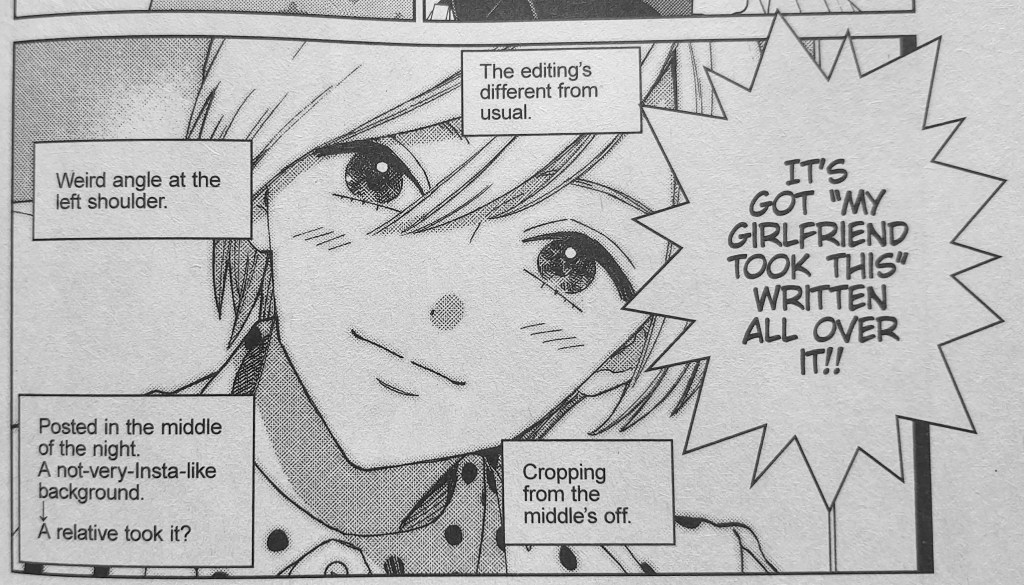
According to Meguru’s boss, “The talent doesn’t need a girlfriend…If they find out their idol has a girlfriend, it’s all over! The day they learn their money pays for your dates with her…their rage will be hell. They’ll destroy everything in their path, and before you know it, your social media will be a wasteland.” In less hyperbolic terms, as the shop’s idol, Meguru must present himself to customers as simultaneously obtainable and unobtainable. This situation does cause him some discomfort. At first, Meguru tries to appease his boss, but then a high schooler asks him out. Meguru notices that the student has attempted to accessorize her uniform. Out of respect for both Wako and this particularly determined teenage customer, he publicly admits that he’s taken, albeit, fails to clarify the gender of his partner, thus avoiding the wrath of his boss since, as she clarifies, “It’s okay if it’s a guy.”
Wako, fortunately, is not susceptible to jealousy. When fans misinterpret Meguru’s relationship with his friend and fellow model, Kira, Wako is eager to talk openly about the rumors.
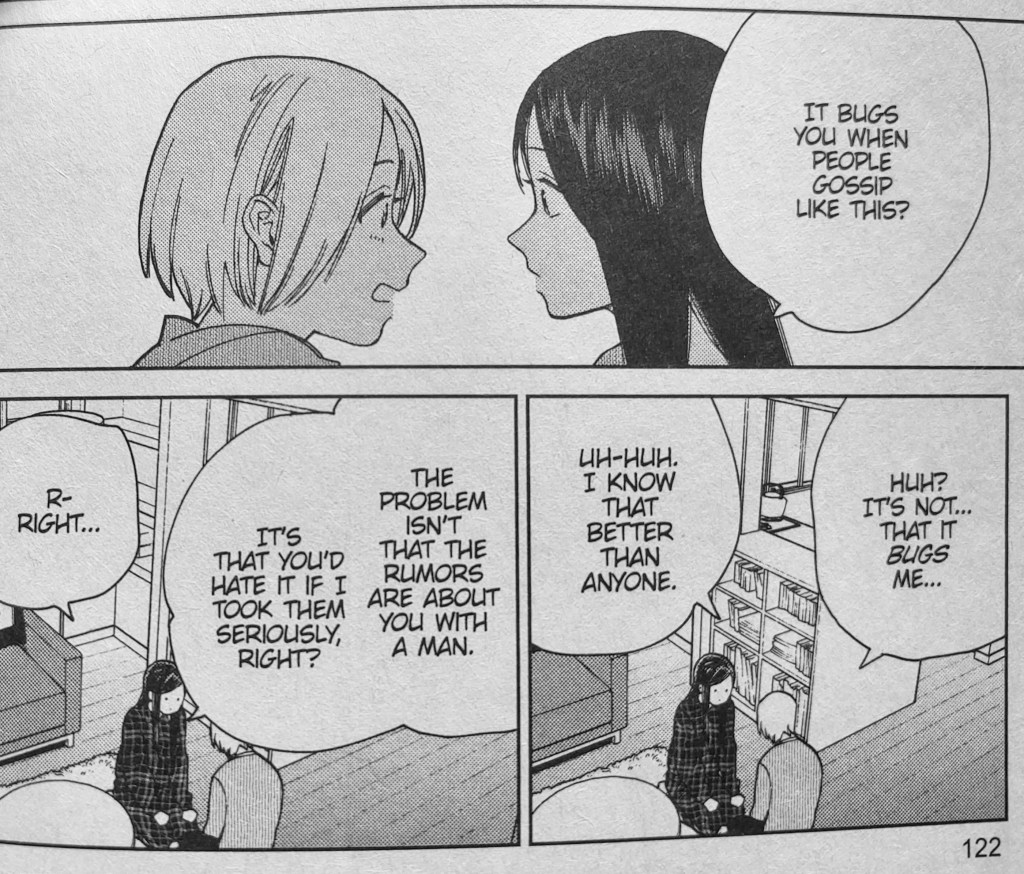
In fact, Wako enjoys seeing all the positive comments on Meguru’s posts each morning, observing, “Meguru-kun brings comfort to everyone again today. It’s weird…seeing people comforted comforts me. I want to be their friend.” Meguru’s success and popularity is a symbol of her own success as an editor and brand builder. Even though Meguru’s fans are unaware of her existence, Wako can’t help but feel an affinity towards them as consumers of her work.
An Acceptable Fantasy
My Androgynous Boyfriend’s narrative is effective because it presents a relationship that is both idealized and entirely believeable. There is nothing exaggerated, tropey, or fantastical about a couple easily expressing their affections, resolving potential conflicts honest dialogue, and enthusiastically supporting each other’s work. And that’s the true joy of the fantasy that My Androgynous Boyfriend gives: it is a healthy romance that takes work to maintain, but is not entirely impossible for all those yearning josei readers out there.
 SpiderHouses