It’s been a really, really busy last three months. I left my retail job, started two remote ones, attended a belated commencement ceremony, got vaccinated, returned to Center City Philly for the first time in fifteen months, and still somehow kept up my 2021 reading pace.
No, my living room is not handling it well. I will spare you the pictures.
I realized that I’ve missed most of AAPI Heritage Month, which is a bit of a shame because I would have loved to have posted something more substantial on here for that. Still, I happened to read Paula Yoo and Lin Wang’s Shining Star: The Anna May Wong Story last week.
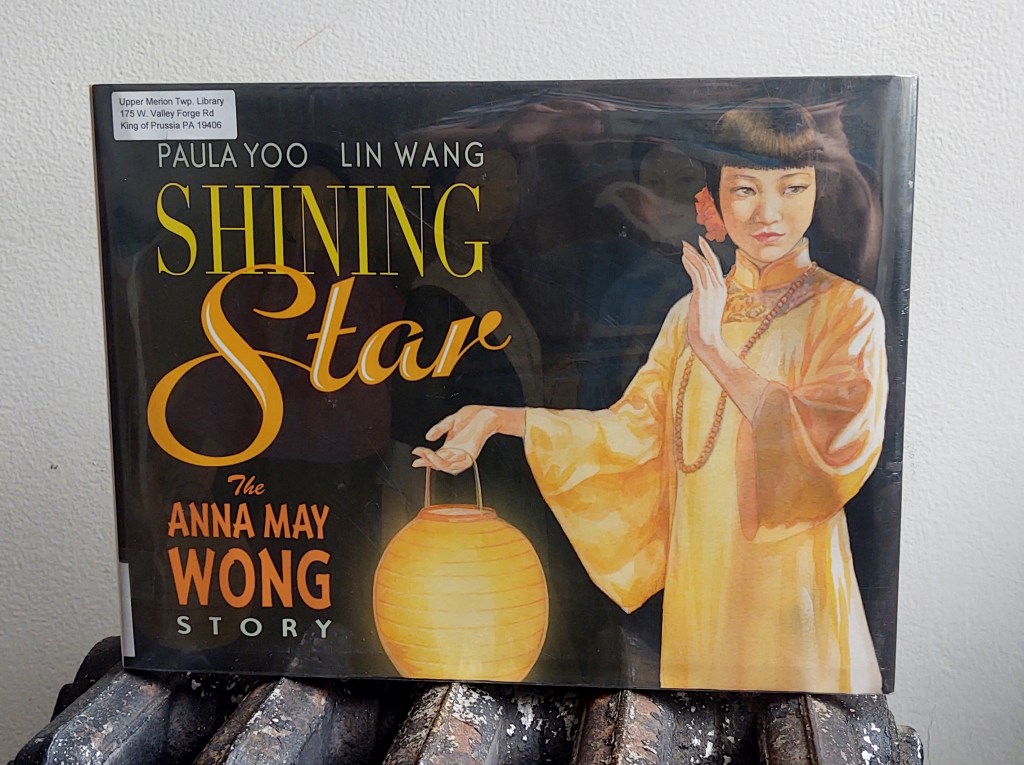
I had always associated Anna May Wong with silent films, but it turns out she was active up until 1960 and even starred in some TV programs! Shining Star provides a nice overview of the first half of her life and the events that shaped her acting career.
What really stuck me about this picture book was the way it tackles the specific forms of anti-Asian racism Wong encountered in the early 20th century film industry. Rather than simplifying racism as name-calling or social rejection, Shining Star introduces young readers to cultural and systematic racist constructs like yellowface, yellow peril tropes, and anti-miscegenation laws. The book further illustrates why these things are harmful by showing how Wong reacted to each of them and how they affected her work.
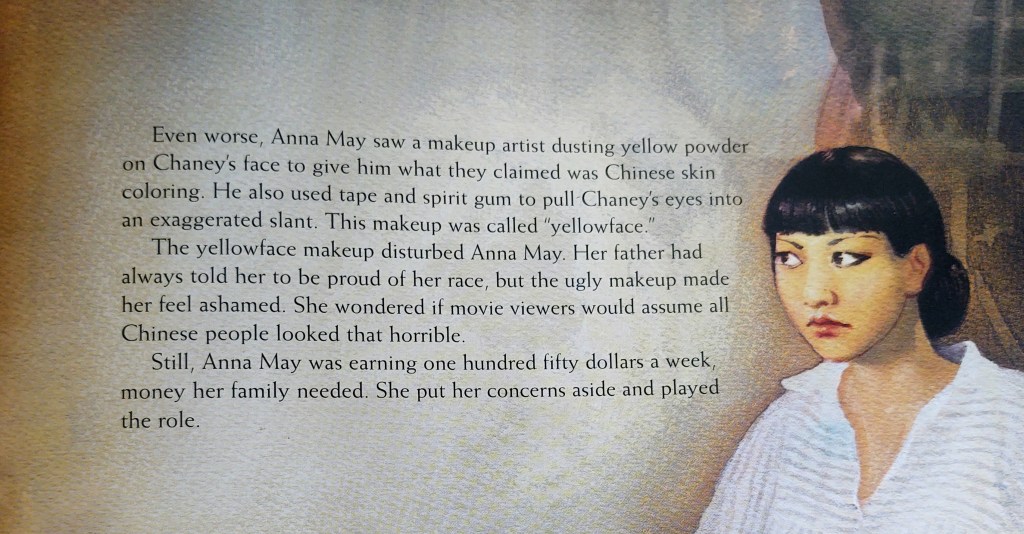
I also appreciated the way Shining Star touched upon the nuanced clash between individual and group values in Asian American families. At first, Wong’s parents are mortified by her acting dreams due to its interference with her education and traditional Chinese attitudes toward actresses. However, her parents allow her to take acting jobs to help supplement the family’s income. Her father eventually realizes that acting brings out his daughter’s greatest strengths.
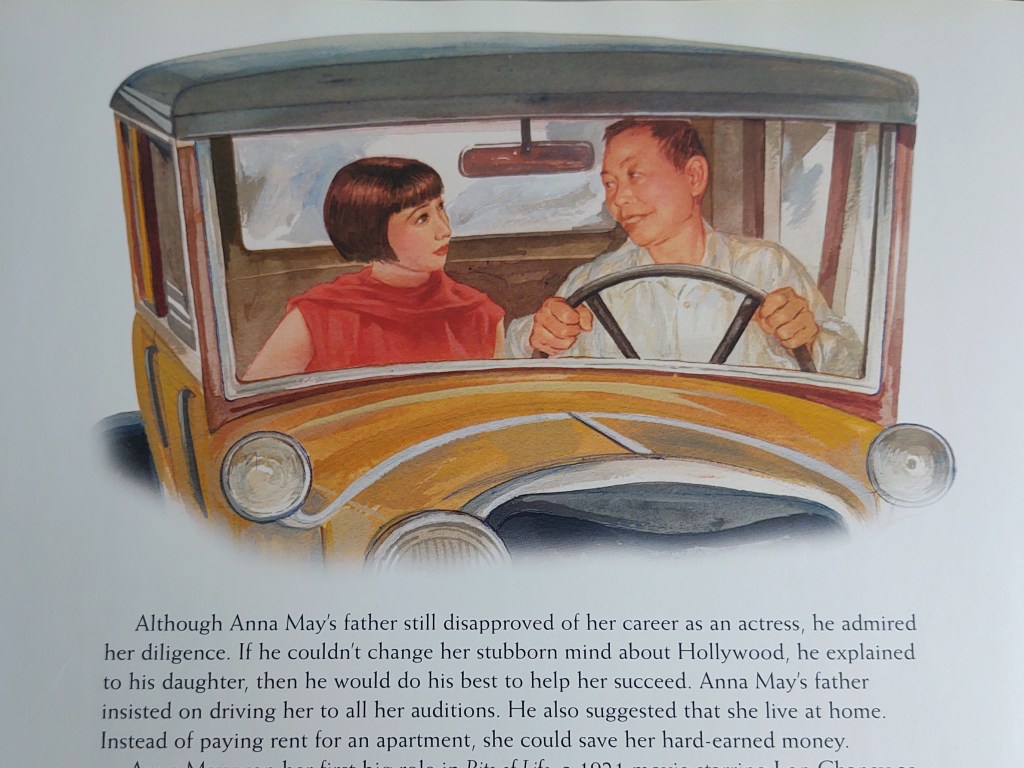
At the end of the book, Wong and her father have a heart-to-heart about his childhood in California. His stories inspire Wong to be more selective about the acting roles she accepts, and she vows to use her fame as way to promote more positive images of Asians in America.
Before picking up Shining Star, I pictured Anna May Wong as a 1920s glamor figure. Now that I have a little more context for her earlier work within the confines of Hollywood racism, I am far more intrigued by her films of the 30s and 40s and am looking forward to delving into some of them.
 SpiderHouses